

OpenRouter
5


90 votes
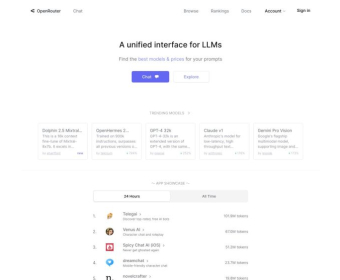
OpenRouter is a unified API for working with multiple large language models (LLMs) through a single, OpenAI-SDK-compatible interface. Instead of integrating and billing separately for each provider, you can browse models in one place, generate an API key, and start sending requests immediately. OpenRouter is designed to reduce friction for developers who want flexibility: choose the best model for a task, compare pricing, and switch providers without rewriting your application.
A key benefit is reliability. OpenRouter uses distributed infrastructure and routing to improve availability and uptime compared to relying on a single vendor endpoint. It also helps optimize spend and performance by letting you select models by price, speed, or capability, and by supporting routing strategies (often described as routing curves) that can balance quality, latency, and cost. For teams that care about governance, OpenRouter supports custom data policies so you can better control how requests and data are handled.
OpenRouter includes tooling to make model selection and routing more transparent, such as model routing visualization, so you can understand which model handled a request and why. There are no subscription fees: you typically add credits, then pay per usage based on the model you choose. Developers can explore the model catalog, compare costs, and integrate quickly using familiar OpenAI-style request formats. more


Comments